Bail Reform Was Never About Public Safety
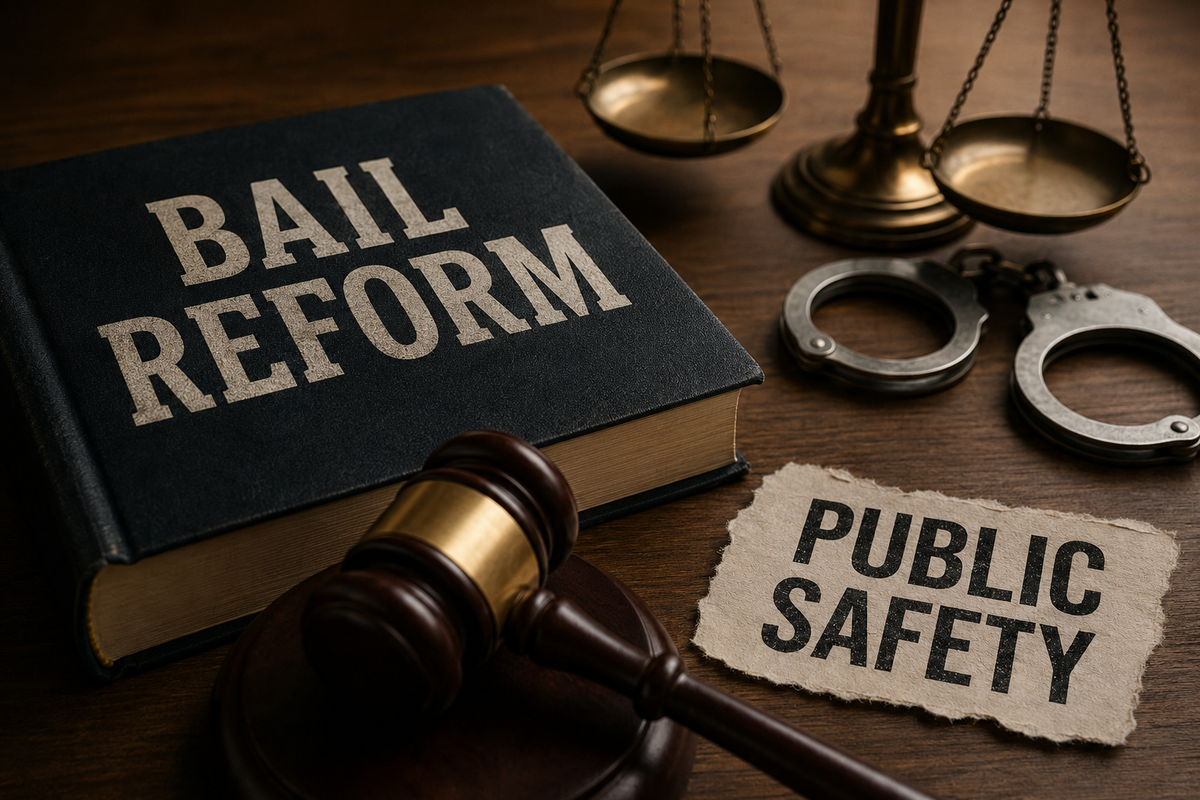
Bail Reform Was Never About Public Safety
Bail reform was never about public safety. It was never about improving outcomes in real courtrooms, real communities, or for real victims. It was an ideological experiment cooked up in classrooms and think tanks, then rammed into law with zero regard for the hard realities of criminal justice. What we’re seeing in Nevada — and across the country — isn’t an unintended consequence. It’s the entirely predictable result of bad policy trumping lived experience.
The Lyon County Sheriff’s Office said it loud and clear. In his January 16, 2026 “Message of the Week,” Sheriff Brad Pope stated what law enforcement, prosecutors, victims, and bail professionals have known for years: while reformers promised to help low-income defendants accused of minor offenses, the laws have instead flooded communities with serious and repeat offenders who go on to commit more crimes. That is not reform. That is outright failure.
Sheriff Pope nailed the accountability dodge. Sheriffs, DAs, and judges take the heat when dangerous people are released, but the real culprits are state legislators who stripped away discretion and replaced it with mandates. When the law demands release, responsibility doesn’t vanish — it just shifts to the streets, where communities pay the price.
Nevada’s laws tell the tale. Assembly Bill 424 slashed the bail hearing window from 72 to 48 hours. Senate Bill 369 ordered judges to use the “least restrictive conditions” and forced prosecutors to justify detention. A 2020 Supreme Court ruling demanded judges weigh a defendant’s finances alongside risk. The outcome? More defendants — including DUI cases — released on their own recognizance, exactly as Sheriff Pope warned.
This is the fatal flaw of the entire bail reform ideology: it pretends risk can be perfectly predicted by tools and hearings, compliance engineered through paperwork, and trust extended forever with no consequences. When released offenders commit new crimes, that illusion collapses.
Look at New York, one of the most aggressive experiments. After implementing sweeping bail reform, the state saw repeat offenders released and rearrested at alarming rates, forcing multiple legislative rollbacks. High-profile cases of individuals committing serious crimes while out on reform-mandated releases fueled public outrage and proved the policy’s recklessness. Similar patterns have played out elsewhere — reformers promise equity, but deliver more victims.
Supporters still chant that these policies reduce “unnecessary” incarceration. The claim gets repeated endlessly, but real evidence of public safety gains is missing. What we have instead is mounting proof of failure: higher failures to appear, repeat offending (with reports of elevated felony rearrest rates among certain released populations in aggressive-reform jurisdictions), overwhelmed courts, and communities left to shoulder the risk. Bail reform didn’t fix inequity. It redistributed harm to the innocent.
Reformers rarely admit that the old system already had individualized review, judicial discretion, and proportional response. What it also had — and what ideology deliberately gutted — was shared responsibility. With surety bail, someone has skin in the game: supervision, follow-up, and real financial consequences. That’s not punishment. That’s accountability.
Violent and sexual offenders should never walk free on their own recognizance under the banner of “fairness.” Fairness doesn’t mean ignoring criminal records or pretending behavior has no patterns. Public safety isn’t preserved by hoping for the best — it’s preserved by systems built to enforce it.
Bail reform was sold as compassionate. In reality, it has been reckless and destabilizing. It swapped proven tools for ideology while protecting policymakers from the damage they caused. Public safety was never the goal. Disruption was.
Sheriff Pope’s call to revisit Nevada’s laws and restore balance deserves real attention. Fairness and public safety are not enemies — they are inseparable. A justice system that puts release above accountability betrays victims, neighborhoods, and the professionals stuck cleaning up the mess.
True reform means restoring realism: Some defendants are dangerous. Patterns matter. Release decisions have consequences. Legislators must stop tying the hands of judges and law enforcement while blaming them for the chaos that follows.
Balance requires confronting risk head-on, not wishing it away. Bail reform was never about public safety — but public safety is now paying dearly for it.
About the Author
Mike Morrison is a Hattiesburg, Mississippi bail bondsman, owner of Mike Morrison Bail Bonding, President of the Mississippi Bail Agents Association, and the 2026 PBUS National Bail Agent of the Year. For more than 35 years, he has worked in Mississippi’s criminal justice system while writing about bail bonds, pretrial policy, public safety, and court accountability. His commentary has reached more than one million readers across social media in 2026. Learn more at https://linktr.ee/mdmorrison.
© 2026 Mike Morrison. All rights reserved.