BAIL SCAMS ARE ROBBING AMERICAN FAMILIES
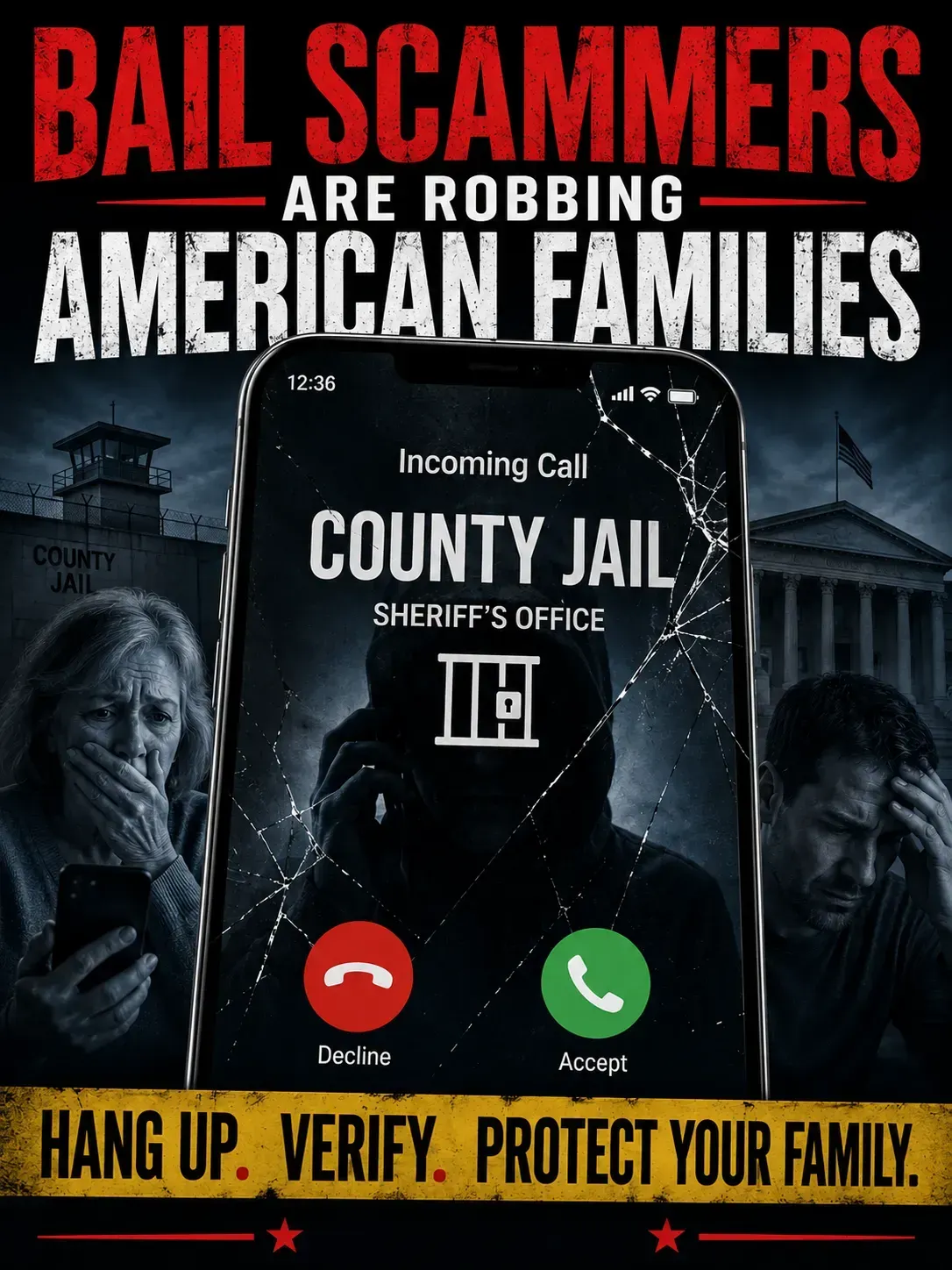
What They Are Doing, How to Stop Them, and Why the Bail Profession Is Leading the Fight
The phone rings. The caller ID shows the county jail. A panicked voice — maybe even the voice of someone you love — says your child, your grandchild, your spouse has been arrested and needs money right now.
Your heart is pounding. You are not thinking clearly. That is exactly what the criminals want.
Across America, organized scammers are systematically targeting families at their most vulnerable moments, impersonating bail bondsmen, law enforcement officers, and even lawyers to steal thousands of dollars from people who are simply trying to help someone they love get out of jail.
The Professional Bail Agents of the United States (PBUS) and the Mississippi Bail Agents Association (MBAA) have been working hard to educate the public, the courts, and sheriff’s departments about these schemes. This article is part of that mission. What follows is everything you need to know — how the scams work, what to do if you have been victimized, and how the licensed bail profession is fighting back.
SECTION ONE: HOW BAIL SCAMMERS ARE ACTUALLY DOING IT
These are not random opportunists. They are organized, increasingly tech-sophisticated criminals who have studied how the bail system works — and they weaponize that knowledge against families in crisis. Here is a detailed breakdown of every known method currently being used.
1. The Cold Call Impersonation
This is the most common scheme. A scammer calls you out of the blue claiming a family member has been arrested and that they are a bail bondsman who was asked to contact you. The call comes with enormous urgency — pay now, or your loved one gets transferred to a harder facility, faces additional charges, or loses their release window.
Here is the single most important fact every American should know: legitimate bail bond agents never make cold calls. A licensed bondsman only contacts family members when directly engaged by the defendant or a known indemnitor. If someone is calling you unsolicited about a bail situation, that alone is a red flag.
2. Caller ID Spoofing
Modern technology allows scammers to make any phone number appear on your caller ID — including the number of the local jail, the county courthouse, or the sheriff’s department. This eliminates your first instinct to distrust an unknown number and adds false official authority before a single word is spoken. Do not trust caller ID in these situations. Ever.
3. AI Voice Cloning — The Most Dangerous Weapon in the Scammer’s Arsenal
This is where the threat has reached an alarming new level, and every family in America needs to understand it.
Voice cloning scams cost Americans over $3.5 billion in 2025. The FTC logged over 250,000 complaints about AI voice scams in Q1 2026 alone.
Using widely available artificial intelligence tools, criminals can now clone a person’s voice from as little as a few seconds of audio pulled from social media — a birthday video, a TikTok post, a Facebook reel. The result is a synthetic voice that sounds, to the human ear, completely identical to your child, your grandchild, or your spouse.
In July 2025, a Florida mother received a call from what she believed was her daughter’s voice — crying, distraught, claiming she had been in a car accident and was facing legal trouble. She sent $15,000 in cash to a courier before discovering the voice had been entirely fabricated by AI. Only after speaking to her real daughter did she understand what had happened.
In a major federal case, a Canadian fraud ring used AI-generated voice cloning to steal $21 million from victims across 46 U.S. states, operating from call centers in Montreal and spoofing American phone numbers to convince grandparents they were paying bail for their grandchildren. A federal grand jury indicted 25 suspects in early 2025.
According to AARP, the jail and arrest variant of this scam accounts for roughly 62% of all reported grandparent scam attempts, with average requests now ranging from $8,000 to $15,000.
4. The Two-Voice Handoff: Panic Plus False Authority
The most sophisticated version of the AI voice scam uses two voices in sequence. First, the cloned grandchild calls — crying, panicked, saying they were arrested for a DUI, drug charge, or hit-and-run. They beg you not to tell anyone. Then a calm, professional-sounding ‘Sergeant’ or ‘Detective’ takes the phone, confirms the story, and provides wire transfer instructions to a ‘court-approved bond service.’
The grandchild voice creates the panic. The fake officer voice creates the legitimacy. Together, they override critical thinking. Some scam rings have even cloned the voices of real law enforcement public information officers using footage from public press conferences on YouTube, making the fake ‘officer’ sound like a real, named person who actually works in that jurisdiction.
The fake officer will often offer to ‘stay on the line’ until the wire transfer goes through — specifically to prevent the victim from hanging up to verify the situation. That is the kill switch.
5. Hacking Jail Records to Target Families
This scheme requires more sophistication but has been documented repeatedly. Scammers hack into county jail computer systems — often by sending phishing emails until a jail employee opens one and installs spyware — and extract the names and contact information of recently arrested individuals and their indemnitors (the people who signed the bond).
Armed with that information, they call family members claiming there is an emergency problem with the bond and that additional payment is required immediately or an arrest warrant will be issued for the defendant. The victims send money believing they are protecting their loved one’s freedom — and then discover they have been robbed.
6. The Jail Messaging System Scam
In one documented case, a scammer posing as a bail bond agent contacted a woman directly through a jail’s internal messaging system — the same system used by inmates to communicate with family. They offered to secure her release for just $600, even though the actual bond was $30,000. The woman’s daughter sent $600 through a payment app, then another $200 when told it was needed for an ankle monitor. The loved one was never released because no legitimate bond had ever been posted.
7. Impersonating Real, Licensed Bondsmen
In a well-documented Florida case, a scammer impersonated a real, licensed bail agent whose office was located directly next to the county jail. The scammer used a company name nearly identical to the real business, had detailed knowledge of how the industry works, and targeted the families of actual inmates housed in that specific jail. The real bondsman was contacted by more than 100 people who had sent money to the scammer.
This type of scam is particularly damaging because it is conducted in the name of a real professional — harming both the victim and the legitimate agent whose reputation is being stolen.
8. The Below-Market Premium Offer
A scammer posing as a bondsman offers to secure a bond for a dramatically reduced fee. The industry standard across the United States is 10% of the total bond amount — set by state regulation. If someone offers you 2% or 3%, or a flat ‘processing fee’ that sounds suspiciously low, you are being set up. Once they receive payment, they disappear, leaving your loved one still behind bars and your money gone.
9. Untraceable Payment Demands
Regardless of which scheme they are running, scammers share one universal characteristic: they demand payment through channels that cannot be reversed or traced. This includes payment apps like Venmo, CashApp, and PayPal, wire transfers through Western Union or MoneyGram, gift cards, and cryptocurrency.
No legitimate court, lawyer, or bail bondsman will ever request bail payment by wire transfer, gift card, or cryptocurrency. Bail is paid through licensed bondsmen or directly at the courthouse — in person, with a contract.
SECTION TWO: RED FLAGS — KNOW THEM BEFORE A CRISIS HITS
The time to learn these warning signs is right now — not while you are panicking on the phone at 2 a.m. Share this list with your family today.
• Any unsolicited call claiming a family member was just arrested
• A caller ID showing a jail, courthouse, or law enforcement number — this can be faked
• Extreme urgency: ‘Pay in the next hour or they get transferred’
• A request for payment via app, wire transfer, gift card, or cryptocurrency
• No paperwork, no contract, no license number offered
• A bondsman who meets you in a parking lot, restaurant, or sends a cash courier to your home
• A premium dramatically below the standard 10% rate
• Being told not to tell anyone — this instruction is designed to isolate you from people who could help you think clearly
• A ‘bondsman’ or ‘officer’ who insists on staying on the phone until payment is sent
And remember: before you do anything, hang up and verify. Call the jail directly using a number from their official website — not a number provided by the caller. Ask whether your family member is actually in custody. This one step alone will stop the vast majority of these scams cold.
SECTION THREE: IF YOU OR SOMEONE YOU KNOW HAS BEEN SCAMMED
Time is critical. Here is exactly what to do, in order.
In the First 60 Minutes
Call your bank immediately and ask them to attempt to recall or reverse the transaction. Wire transfers can sometimes be reversed within the first 24 hours. If you paid through a payment app, contact their fraud department right away. Act before you do anything else.
Report to Federal Authorities
• File a complaint with the Federal Trade Commission at ReportFraud.ftc.gov — this helps track scam patterns nationally and supports broader law enforcement efforts.
• File a complaint with the FBI’s Internet Crime Complaint Center at IC3.gov — wire fraud and impersonation of law enforcement are federal crimes. Even partial reporting builds the case against organized criminal rings.
• Call the AARP Fraud Helpline at 877–908–3360, which provides guidance and connects victims to resources.
Report Locally
• Contact your local law enforcement agency and the county sheriff’s department.
• If the scammer claimed to be a licensed bail agent, contact your state’s Department of Insurance. In Mississippi, unlicensed bail activity is a criminal offense. Reporting it triggers regulatory and criminal investigation.
• If the scammer was impersonating a specific, named bail bond company, contact that real company immediately. A legitimate agent can alert the jail, warn other families, and assist law enforcement.
Tell Your Story
Do not be embarrassed. These scams are engineered by professionals to defeat your instincts. The more people share what happened to them, the more families are protected. Report publicly. Tell your neighbors. Post in your community groups. Every warning shared is a family protected.
SECTION FOUR: HOW THE BAIL PROFESSION IS LEADING THE FIGHT
Licensed bail agents and their associations are positioned to do more than any government agency in this space, because they have direct relationships with the public, the courts, and the jails. Here is what PBUS and MBAA are doing — and what the entire profession can do — to stop these scams.
Public Education
The most effective weapon against bail scams is an informed public. PBUS and MBAA are actively producing and distributing educational content across social media, community channels, and industry publications. Teaching families the core rules — a real bondsman never cold calls, never asks for payment by app or wire, always provides a license number and written contract — disrupts the scammer’s entire playbook.
Sheriff and Jail Partnerships
Working directly with county sheriffs and jail administrators to post scam warnings at intake, on jail websites, and in any communication with newly arrested individuals and their families is one of the highest-impact actions the profession can take. A simple one-page notice at every jail — ‘If someone calls claiming to be a bail bondsman and asks for payment by app or wire transfer, it is a scam — contact the sheriff’s office immediately’ — could prevent losses totaling millions of dollars per year.
The Family Safe Word
Security experts now strongly recommend that every family establish a private code word that only real family members would know — a word that must be spoken before any emergency request is taken seriously. An AI voice clone is working from a script. It cannot improvise personal memories. Asking ‘what did we have for dinner at Christmas last year’ or ‘what did you give me for my last birthday’ will expose a synthetic voice immediately. MBAA and PBUS can help spread this habit across the communities they serve.
License Verification
Every licensed bail agent in Mississippi and across the country can be verified through the state Department of Insurance. Promoting this tool and making it easier for families to access in real time — rather than navigating a government website while under pressure — is a direct service the profession can provide. A simple landing page or hotline that allows instant verification of a bail agent’s license would be a meaningful innovation.
A Unified ‘Verify Before You Pay’ Campaign
PBUS and MBAA can anchor a coordinated public safety coalition alongside the state Department of Insurance, county sheriffs, and the courts, built around one simple message: verify before you pay. The bail profession’s expertise and credibility make it the natural leader of this effort — and positioning licensed agents as the public’s guide through a confusing and dangerous landscape reinforces exactly the kind of trust and community partnership that makes surety bail essential.
THE BOTTOM LINE
The scale of this problem is staggering. Seniors alone lost $4.9 billion to cybercrime in 2024 — a 43% increase from the prior year — and bail scams are a significant and growing portion of that total. With AI voice cloning now indistinguishable from real human voices, no family is immune unless they know exactly what to look for.
No one understands how the bail system actually works better than licensed bail agents. That knowledge is not just a professional asset — it is a public safety resource. PBUS and MBAA are committed to making sure that resource reaches every American family that needs it.
Share this article. Print it. Read it to your parents and your grandparents. The scammers are counting on panic and ignorance. We are counting on preparation and awareness.
When in doubt, hang up and verify.
About the Author
Mike Morrison is the 2026 PBUS National Bail Agent of the Year, President of the Mississippi Bail Agents Association, and owner of Mike Morrison Bail Bonding in Hattiesburg, Mississippi. A licensed bail agent with more than 35 years of experience, he writes on bail bonds, pretrial release, public safety, criminal justice, and court accountability. Morrison's work is based on daily experience in the courtroom and has reached more than one million readers across social media in 2026. Learn more at https://linktr.ee/mdmorrison.