The $7 Cheeseburger and the 60 Convictions They Don't Want You to See
The Bail Project cited the Marshall Project's reporting — then erased every fact that explained the judge's decision.
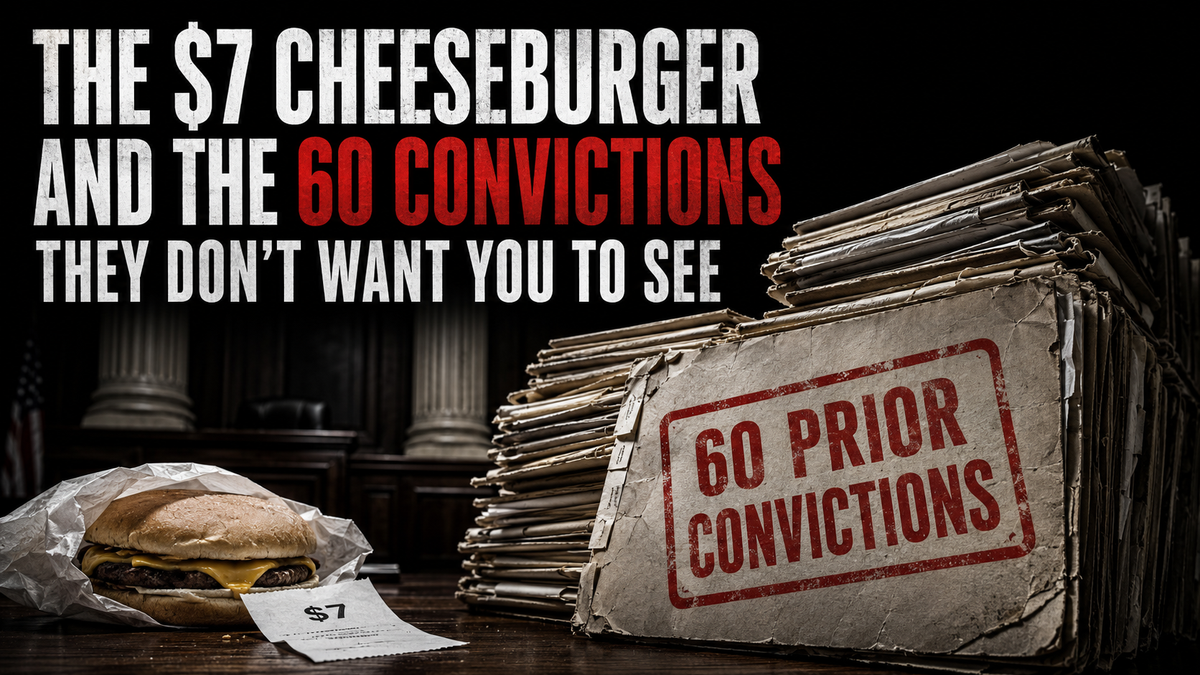
The Bail Project published a piece this month celebrating the California Supreme Court's Kowalczyk ruling. Their headline case: an unhoused man jailed on $75,000 bail over a $7 cheeseburger. That's the story they want you to repeat at dinner parties. A cheeseburger. Seventy-five thousand dollars. What kind of monster sets that bail?
Here's the problem. The Bail Project cited the Marshall Project's own reporting as their source for the Kowalczyk case. They linked to it. Which means they read it. And the Marshall Project's article tells you exactly why that judge set $75,000:
Gerald Kowalczyk had more than 60 prior convictions.
Sixty. Not six. Sixty.
 The Bail Project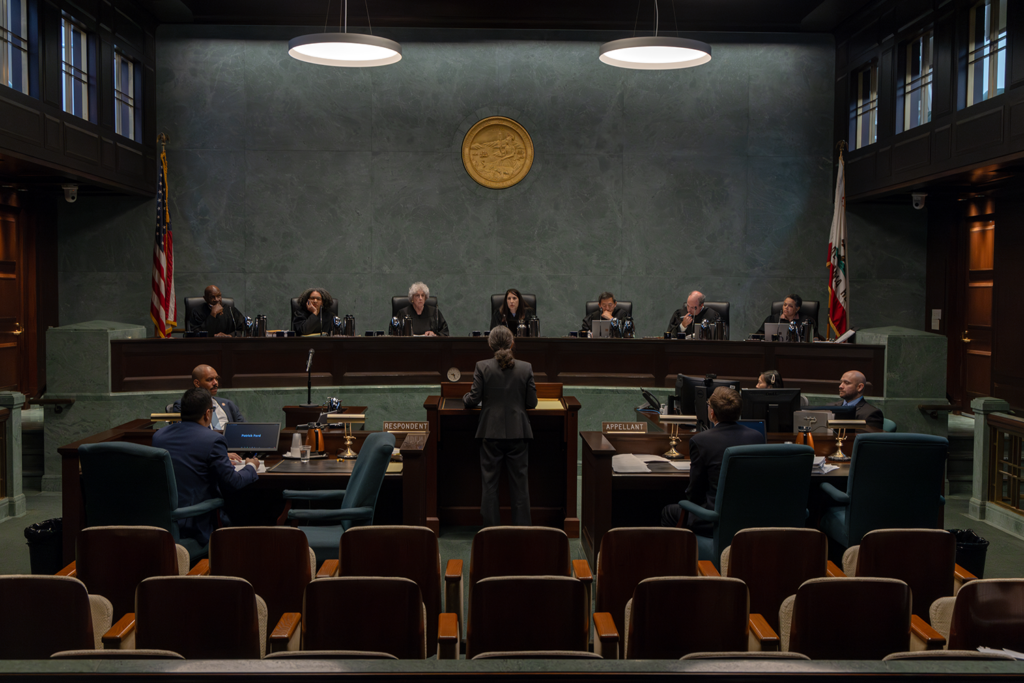
The Marshall Project also reported that he had a long record of failing to comply with his pretrial release conditions, and that he scored in the highest-risk category on California's own pretrial risk assessment tool. Not a bail agent's assessment. Not a prosecutor's assessment. The state's own reform-approved algorithm looked at this man's history and rated him a maximum risk to skip court.
The Bail Project's version of the story? None of that appears. Not one word. They kept the cheeseburger. They kept the $75,000. They deleted the sixty convictions, the pretrial violations, and the risk score — the three facts that explain the number they want you outraged about.
That is not an oversight. You do not cite a source, lift the sympathetic details out of it, and accidentally leave behind every fact that undermines your narrative. That is curation. And it tells you their readers are not being informed. They are being worked.
 Jamiles Lartey
The judge did his job
Strip away the spin and look at what actually happened. A man with 60+ convictions and a documented pattern of violating release conditions was arrested on identity theft, petty theft, and other charges. Identity theft — using someone else's credit card — is not a story about a hamburger. It is a story about a stranger's stolen financial information. The dollar amount of the purchase is irrelevant to the victim whose card was in someone else's hands.
The judge looked at the record in front of him: the new charges, the sixty priors, the history of blowing off pretrial conditions, the state's own highest-risk rating. He set bail accordingly. That is precisely what bail is supposed to do. Bail is not priced off what a defendant can afford. It is priced off criminal history, the charges at hand, and the risk that the defendant will not come back to court. On every one of those measures, Kowalczyk was the textbook case for high bail.
The reform movement's answer is that the amount was "unaffordable." Of course it was. Affordability was never the question. A man who has failed to appear again and again does not become a good risk because he is broke. If anything, the record says the opposite — and the record is the one thing the Bail Project refused to print.
Even the reformers' own witnesses hedge
The Marshall Project, to its credit, printed the record. It also quoted a San Mateo County deputy district attorney who acknowledged the ruling leaves trial courts guessing at what "reasonably attainable" bail even means, and who admitted prosecutors remain worried about defendants who repeatedly miss court dates or violate protective orders. Defendants, in other words, exactly like Gerald Kowalczyk.
And buried in the Bail Project's own article is a concession they hope you'll skim past: the Kowalczyk decision does not eliminate cash bail, and judges may still weigh public safety and criminal history when setting it. By their own admission, the factors that produced the $75,000 figure remain valid considerations under the ruling they're celebrating. They just couldn't bring themselves to tell you what those factors were in this case.
Follow the money
Why omit the record? Scroll to the bottom of the Bail Project's article and you'll find your answer: a donation appeal. The cheeseburger story raises money. The sixty-conviction story does not. A 501(c)(3) that funds itself on outrage cannot afford to give its donors the full docket, because a fully informed donor might conclude the judge got it right.
That is the pattern across the bail reform advocacy industry. The client story leads. The criminal history vanishes. The donate button closes the sale. When your fundraising model depends on hiding the defendant's record from your own supporters, you are not running a justice movement. You are running a marketing operation.
Read the Marshall Project's reporting. Then read the Bail Project's version side by side and ask yourself one question: if the facts were on their side, why did they have to delete them?
Sources: The Bail Project, "The Kowalczyk Ruling Is a Warning to Courts," July 9, 2026; The Marshall Project, "Did the California Supreme Court Just Remake the State's Bail System?" by Jamiles Lartey, May 9, 2026.
About the Author Mike Morrison is the 2026 PBUS National Bail Agent of the Year and President of the Mississippi Bail Agents Association. With more than 35 years of hands-on experience as a licensed bail agent and owner of Mike Morrison Bail Bonding Company in Hattiesburg, Mississippi, he brings real-world insight to America’s most important conversations on criminal justice, pretrial policy, public safety, and good governance.
Morrison writes and speaks from the front lines — courtrooms, jails, and communities — rather than from theory. His commentary on policy, taxes, justice reform, and the daily realities facing working Americans has earned more than one million views across social media in 2026 alone. He regularly presents on bail policy and professional standards at the Mississippi Judicial College and leads ethics and training programs for bail professionals nationwide.
Independent, plain-spoken, and grounded in practical experience, Mike is committed to clear-eyed analysis that cuts through political noise — whether the topic is public safety, government accountability, or the true cost of policy decisions on Mississippi families and the nation.
© 2026 Mike Morrison. All rights reserved.