Thomas Paine, Accountability, and the Architecture of Public Safety
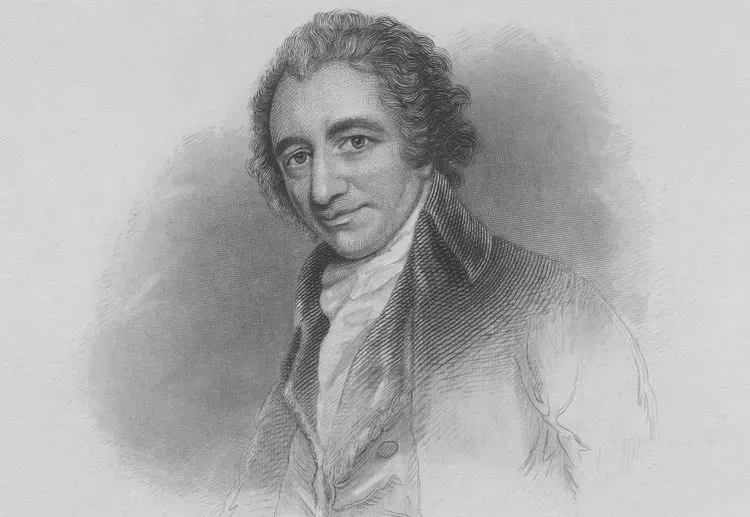
Thomas Paine was an English-born political writer and revolutionary thinker who played a major role in inspiring American independence. His 1776 pamphlet Common Sense made a clear, persuasive case for breaking away from British rule and helped turn public opinion toward revolution.
There is a mistake that shows up repeatedly in modern policy discussions, and it is the tendency to treat Thomas Paine as a historical figure whose relevance ended with the American Revolution. That approach misses the entire point of what Paine actually contributed. He was not writing for a moment in time. He was writing about structure — how power operates, how systems sustain themselves, and what happens when authority becomes separated from responsibility. Those principles did not expire in 1776. They apply just as directly to the systems we are operating today, including the modern pretrial environment.
When Paine published Common Sense, he did something far more significant than argue for independence. He forced a structural evaluation of governance itself. He stripped away tradition, status, and long-standing assumptions and asked a simple but direct question: does the system in place make sense based on how it actually functions? His rejection of monarchy was not emotional. It was operational. A system that concentrates authority while insulating decision-makers from the consequences of those decisions will eventually fail the people it is supposed to serve. That principle is not limited to kings. It applies to any system where power exists without direct accountability.
That is where the connection to today’s pretrial systems becomes clear.
At its core, the issue is not whether reform is necessary. Systems should evolve. The real question is whether those changes strengthen accountability or quietly remove it. Over the past decade, we have seen a steady shift away from accountability-based pretrial structures and toward models built on unsecured release, risk assessments, and publicly funded supervision programs. These approaches are often presented in polished, appealing language, but when examined operationally, they introduce a fundamental structural weakness. They rely on the assumption of compliance rather than building compliance into the system itself.
When a defendant is released without a financial obligation, without family-backed involvement, and without a private party carrying responsibility for ensuring that individual returns to court, the system has made a conscious decision to operate on voluntary participation. When that participation fails — and it does — the responsibility does not disappear. It shifts outward onto clerks, law enforcement, and already strained court systems. The system becomes reactive rather than structured. It begins managing failure instead of preventing it.
Paine understood this dynamic with remarkable clarity. He argued against systems that depend on assumption rather than design. He warned against structures where responsibility becomes so diffused that no one is directly accountable when things go wrong. That warning is not theoretical. It is exactly what we see when pretrial systems move away from enforceable accountability mechanisms.
The surety bail profession exists within this discussion as a structural counterbalance, not simply as a financial tool. A bail bond is not a transaction in the way it is often portrayed. It is a system of assigned responsibility. The defendant has an obligation. The family is engaged and aware. The bail agent carries direct financial and professional liability. The court’s authority is reinforced by an enforceable mechanism that ensures follow-through. Each component is connected, and each has a defined role in maintaining the integrity of the process.
That is not incidental. That is design rooted in accountability.
When Paine wrote during the most difficult periods of the Revolutionary War in The American Crisis, his concern was not theoretical success. It was whether the system could hold under pressure. Could it function when tested, or would it collapse when conditions became difficult? That is the same question that must be asked of any pretrial system today. It is easy for a system to appear functional in limited conditions or short-term analysis. The real test is whether it maintains performance over time, across thousands of cases, under real-world pressures.
Systems that rely primarily on administrative supervision without embedded accountability often begin to show signs of failure over time. Missed court appearances increase. Warrants remain unserved. Cases begin to stall. Court dockets become congested. The system shifts into a cycle of delay and response instead of structured compliance. The issue is not intent. The issue is that the structure itself does not enforce performance.
Paine’s framework does not allow us to evaluate systems based on their intentions. It forces us to evaluate them based on their outcomes.
There is another dimension of Paine’s work that carries equal importance in this discussion. In Rights of Man, he addressed the dangers associated with the concentration of power. He did not argue against government. He argued for a system of government that remains balanced, constrained, and accountable to the people it serves. When authority becomes consolidated within a single system without meaningful external checks, the risk is not only inefficiency. The risk is overreach.
That concern is directly relevant to the modern pretrial landscape.
When government assumes full control over release decisions, supervision, enforcement, and consequence — without the involvement of independent accountability structures — the system becomes internally contained. The same entity makes the decision, monitors compliance, and responds to failure. Responsibility is no longer distributed. It is centralized. That may appear efficient on paper, but it removes a critical safeguard that has historically helped ensure performance.
The surety bail profession provides that safeguard. It does not diminish the authority of the courts. It reinforces it. It ensures that court orders carry weight beyond the moment they are issued. It introduces a layer of accountability that operates alongside the court system, not within it, creating a structure where responsibility is shared and failure triggers immediate corrective action.
This is not a philosophical argument. It is an operational one grounded in outcomes.
If we are going to have a serious discussion about pretrial systems, the evaluation must be based on performance. Does the system ensure that defendants return to court? Does it assign responsibility clearly when they do not? Does it reduce the burden on public systems, or does it increase it? Does it maintain public confidence, or does it gradually erode it through inconsistency and delay? Most importantly, does it prevent the concentration of unchecked authority, or does it contribute to it?
These are not new questions. They are the same questions Thomas Paine forced a nation to confront more than two centuries ago.
What made Paine effective was not that he raised his voice. It was that he clarified reality. He took complex systems and reduced them to their functional truth. He made people confront whether what they were operating under actually worked.
That is exactly where this conversation belongs today.
The debate over bail is not about ideology. It is about whether the system produces accountability or excuses its absence. It is about whether court orders are enforced or ignored. It is about whether public safety systems operate with structure and discipline or drift under the weight of unmanaged discretion.
Thomas Paine did not fight against government.
He fought against systems that operate without accountability.
That distinction is not historical.
It is immediate.