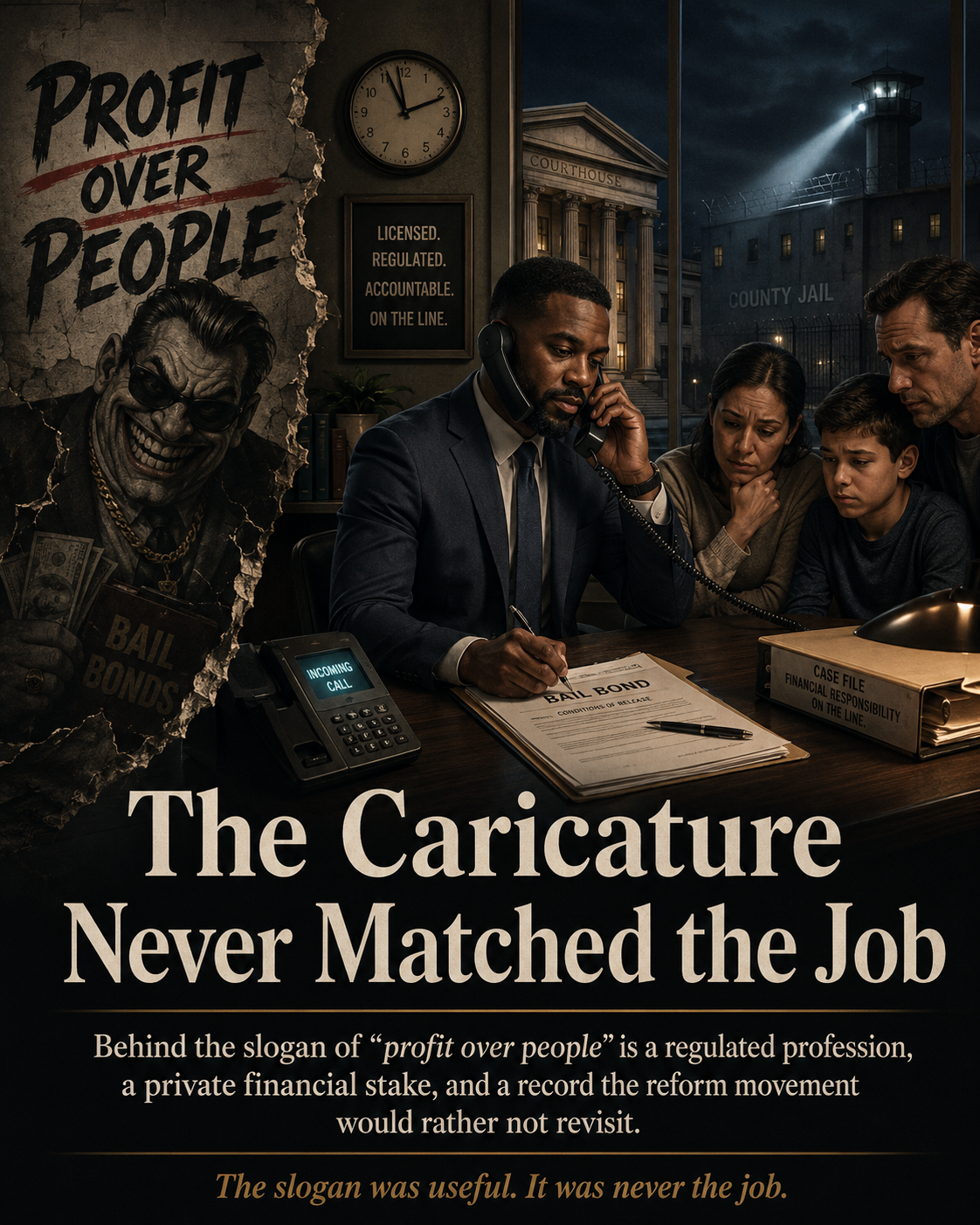
The Caricature Never Matched the Job
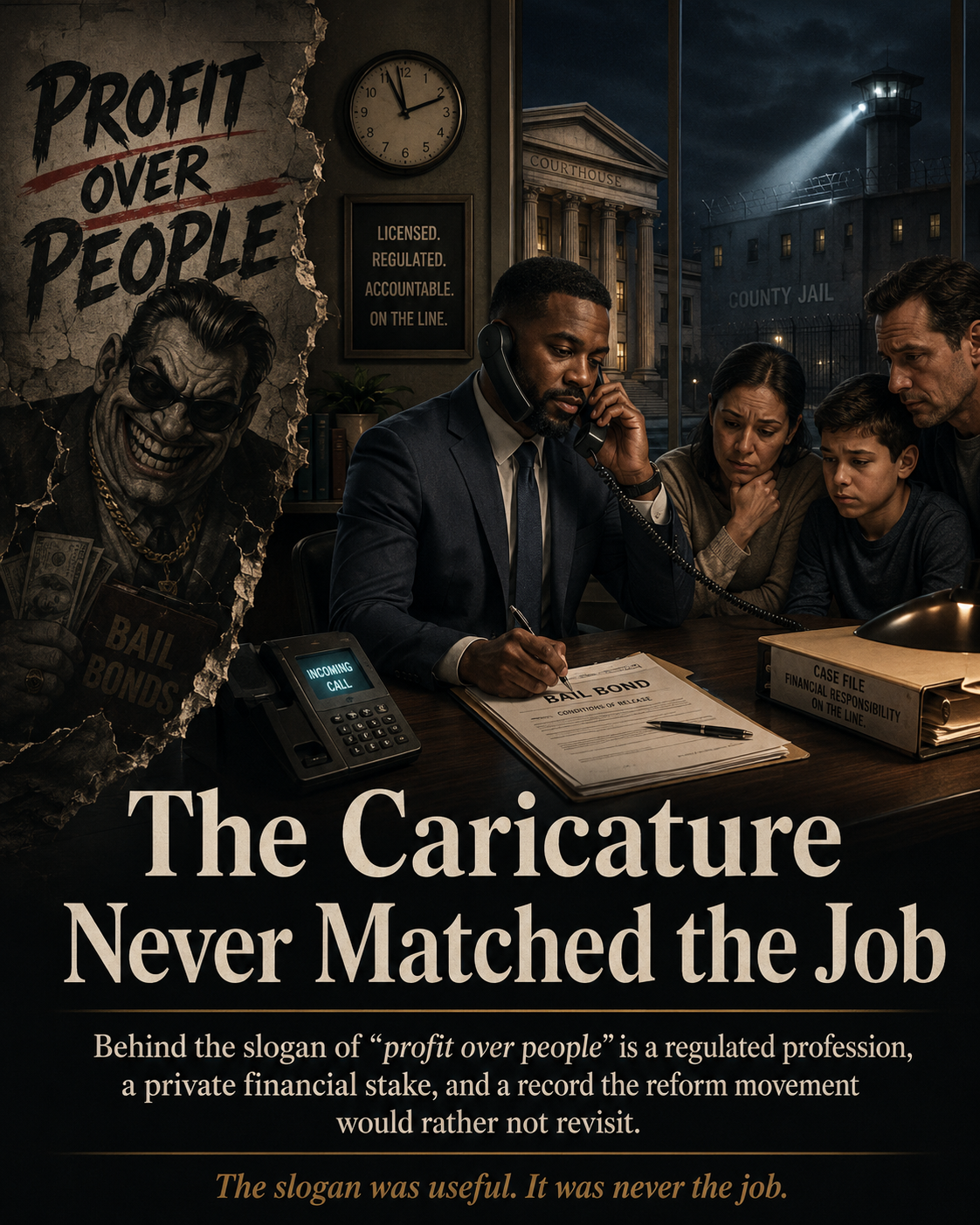
Behind the slogan of “profit over people” is a regulated profession, a private financial stake, and a record the reform movement would rather not revisit.
The anti-surety movement has built its public case on a single substitution: take the mechanical reality of a cash bail number, bolt on a handful of isolated misconduct stories, and present the result as a description of the typical licensed bail agent. Once that substitution is made, the conclusion writes itself — an industry that exists to profit off desperation. It is a clean slogan. It has never been an accurate description of the profession that operates under Mississippi law.
Premiums are not invented by the agent across the desk. Mississippi Code § 83-39-25 sets them by statute: ten percent of the bond amount, or $100, whichever is greater; fifteen percent for capital offenses or out-of-state defendants; plus a required $50 processing fee. Financing rules further limit what an agent can do. Once a bond is posted without full payment, the unpaid balance is a civil debt. Surrender cannot be used as a collection tool for that balance. These guardrails exist because the law anticipated the abuses critics now describe as inevitable.
Layer onto that the defining feature of the model: private risk. When an agent writes a bond, the agent's own money stands behind the defendant's appearance, not the taxpayer's. The data is clear. Helland and Tabarrok's peer-reviewed research found defendants released on commercial surety were substantially less likely to fail to appear than similar defendants on other forms of release, and, if they did fail to appear, far less likely to remain at large for extended periods. Large-urban-county patterns and related examinations point the same direction. That incentive structure works.
What the caricature erases entirely is the unpaid, unglamorous reality of the job. A mother calls at 11 p.m., voice shaking, trying to locate her son and understand what happens next. Families arrive with the same urgent questions every time: Do we need a lawyer? Where do we go for court? How should the defendant dress? What if the date changes? A professional bail agent answers those calls, explains the process, urges qualified counsel, reinforces court obligations, and remains available for the life of the bond. That guidance keeps defendants working, supporting their families, and preparing a defense instead of sitting in a cell. None of it is funded by taxpayers or grants. It is simply the work.
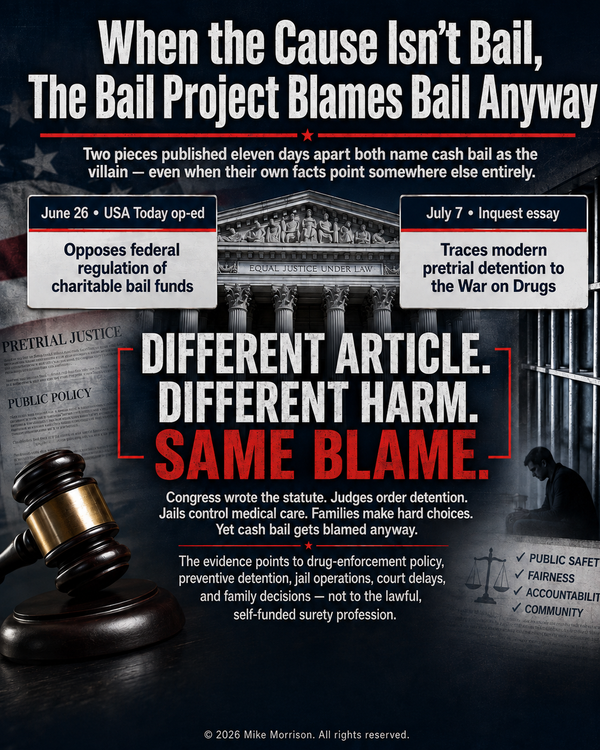
The narrative does something more than exaggerate. It relocates blame. Jail medical failures, detention-without-bail presumptions written into the 1984 Bail Reform Act, post-conviction holds, a family's own decision to leave someone in custody to sober up or wait for a treatment bed — none of that belongs on a bail agent's desk. Yet the same rhetorical move that produces “profit over people” routes all of it there anyway. The agent is a convenient local face for causes that sit well outside the profession.
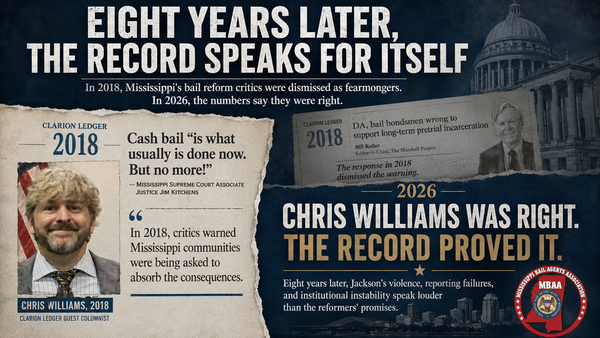
Mississippi's own eight-year record is the clearest rebuttal to the claim that dismantling commercial accountability was the unambiguous win its architects promised. After the 2017 rules changes, the number of bonds written statewide fell and revenue collected at release dropped — a direct hit to the private accountability structure that costs taxpayers nothing. What followed was not a corresponding gain in public safety. Jackson posted the nation's highest per-capita homicide rate among major cities for five consecutive years. Its police department was caught — more than once — manipulating the crime numbers that were supposed to prove the reforms were working. That is not an isolated misconduct case on the agent's side of the ledger. That is the other side's own public record undercutting the success story it told about itself.
Licensed bail agents operate under state exams, bonding requirements, continuing education, and insurance-department oversight. Agents who break the law or mistreat the public should face real consequences. Isolated failures do not define the profession, and a political slogan does not replace the daily reality of the work.
The image the anti-surety movement has painted is useful to its cause. It has never matched the job. Hardworking agents answer the late-night calls, stand behind the bond with their own money, guide families through one of the most stressful moments of their lives, protect the presumption of innocence, and keep the courts functioning — without asking the public to underwrite the risk. That is the profession. The caricature never was.
 Michael D. Morrison
 Michael D. Morrison